


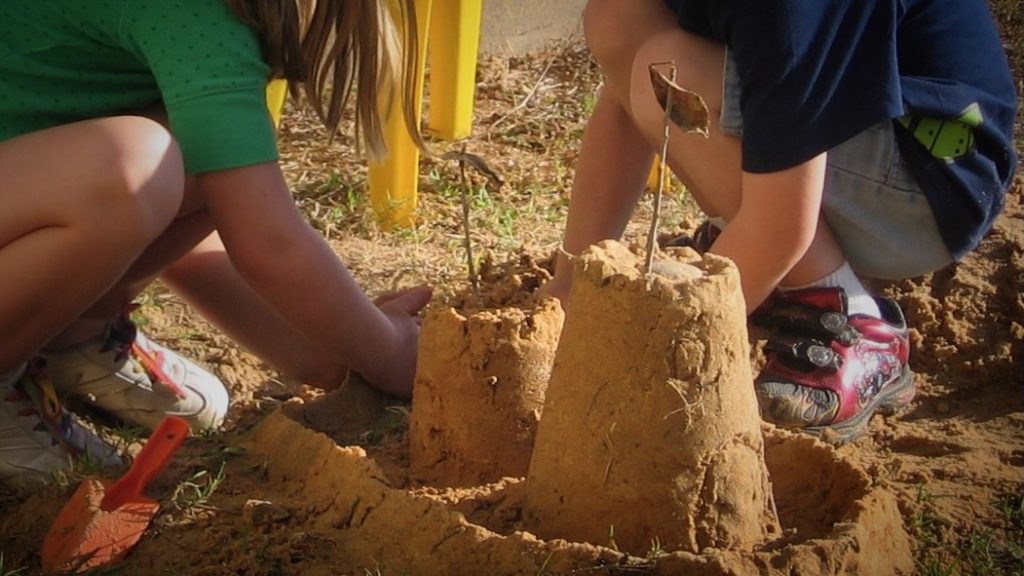
I cherished my sandbox. My dad would pour sand into the box he built for me, and I would sift and push the sand around in little heaps for hours. But I found that playing in the black dirt of the vegetable and flower gardens exposed greater rewards.
Small wiggly worms would squirm their way back into the dirt. Tiny “pill bugs” or “doodle bugs” curled into tiny balls as soon as you touched them. The black dirt held life. Not until much later in biology class did I see with my own eyes the microscopic life also hiding in the dirt.
The dark earth, the water, the rivers, and forests hold mysteries that we take for granted. We assume all that life will remain in spite of what we humans take from it for our benefit.
This week, we celebrate Earth Day. Curiosity set my research mode in motion. When did Earth Day begin, by whom, and why?
I discovered the work of Gaylord Nelson, who spearheaded the first Earth Day in 1970. Nelson had the idea of teaching people about the Earth, our impact on ecosystems, and the environment. Now, with an international effort, people across the world are learning about the effects of our actions and how we can restore the balance of those systems.
Living in cities and suburbs, we easily lose the ability to see and feel the influence of industrialization on the earth. If you have ever walked through a forest, stood in the mountains, or sunk your toes into a sandy beach, you probably felt the heartbeat of Mother Earth.
In Braiding Sweetgrass, Robin Wall Kimmerer, an environmental biologist and member of the Citizen Potawatomi Nation, writes about the symbiotic relationship we have with the earth, plants, and creatures through the wisdom of indigenous people and science. We are all connected.
Her observations, insights, and wisdom reminded me why I still marvel at clouds, oceans, creatures large and small, and the unspeakable beauty of a meadow full of wildflowers.
“We know that loving a person has agency and power—we know it can change everything. Yet we act as if loving the land is an internal affair that has no energy outside the confines of our head and heart.” —RWK
If you can, find yourself a small patch of dirt, see what you can find, and take a few moments to listen to the sounds of nature. Our gratitude and actions to protect this earth are the greatest gifts we can give our children.
National Poetry Month continues, so I thought it fitting to share my poetic observation of the eagle majestically perched in the lake behind our house. We marvel at the eagle’s size and swiftness as it swoops into the lake for a tasty fish.
Earth Day—April 22, 2026—it’s not just a day, it’s a responsibility.
An elegy
We are all connected
“Humankind has not woven the web of life. We are but one thread within it. Whatever we do to the web, we do to ourselves. All things are bound together. All things connect.”
—Chief Seattle
I always welcome your thoughts, so please leave a comment
And always—
Be kind. Be brave. Be you.
Photos: © Kathryn LeRoy
Leave A Comment